
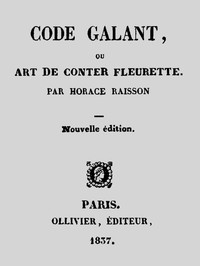
Code galant, ou, Art de Conter fleurette by Horace Raisson
Let's set the scene: Paris, 1842. The streets are bustling, the salons are buzzing, and according to Horace Raisson, you need a rulebook to navigate the treacherous waters of love. Code Galant presents itself not as a novel, but as a formal legal document. It's divided into 'titles' and 'articles' that legislate every aspect of romantic pursuit.
The Story
There's no traditional plot with characters. Instead, the 'story' is the unfolding of this bizarre, meticulous legal system for the heart. One 'law' might decree the exact number of days you must wait to reply to a billet-doux. Another outlines the penalties for 'breach of promise' in a courtship. It covers everything from the strategic use of a fan to the legal definition of a successful 'declaration.' The book walks you through the entire process, from first glance to (hopefully) matrimony, all framed with the pompous gravity of a government statute. The joy is in the details—the utterly serious discussion of utterly frivolous social rituals.
Why You Should Read It
I picked this up expecting something stuffy and found myself laughing out loud. Raisson's genius is his deadpan delivery. He never winks at the camera; he commits fully to the bit. This makes the satire so much sharper. You're not just reading about old-fashioned dating; you're seeing a brilliant critique of how society loves to make simple human connections needlessly complicated. It holds a mirror up to our own time, too. Sure, we don't have formal codes for flirting, but don't we have our own unwritten rules, social media etiquette, and dating app anxieties? The book is a reminder that the anxiety around 'getting it right' in romance is nothing new.
Final Verdict
This is a perfect little treat for anyone who loves history, humor, or a clever turn of phrase. If you enjoy Jane Austen's social observations but wish they came with mock-legalese, this is for you. It's ideal for a lazy afternoon, a book club looking for something completely different, or a history buff who wants to see the past's lighter side. It's not a sweeping romance novel; it's a sharp, funny, and surprisingly insightful commentary on the games people play, packaged in the most delightfully absurd way possible.
This book is widely considered to be in the public domain. You can copy, modify, and distribute it freely.
Anthony Smith
1 year agoI have to admit, the flow of the text seems very fluid. Don't hesitate to start reading.

Betty Smith
9 months agoVery helpful, thanks.