
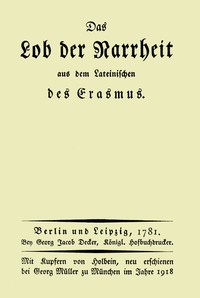
Das Lob der Narrheit by Desiderius Erasmus
Written in 1509, The Praise of Folly is a satirical speech delivered by a fictional character: Lady Folly. She appears before a crowd, dressed as a jester, and proceeds to praise herself. She argues that she, Folly, is the source of all human happiness, success, and even survival. Without her, she claims, life would be miserable.
The Story
The 'plot' is Folly's argument. She walks us through every part of society. She says that friendships and marriages only work because of foolish blindness to each other's faults. She claims that war, politics, and the pursuit of fame are all driven by vanity—a form of folly. Then, she gets really bold. She turns her eye to the most powerful people of her day: theologians, monks, bishops, and even the Pope. With a sly smile, she points out their hypocrisy, their greed, and their love of ceremony over true faith. She doesn't stop there. She even questions the scholars and philosophers, suggesting their wisdom is often just pride in a different costume. The whole book is her cheeky, relentless case that foolishness isn't a bug in humanity—it's the main feature.
Why You Should Read It
First, it's genuinely funny. Erasmus had a wicked sense of humor. Reading Folly roast 16th-century society feels like watching a brilliant stand-up comedian from 500 years ago. But the laughter has a point. Underneath the jokes is a serious plea for simplicity, humility, and genuine kindness. Erasmus was frustrated with a Church and society that had lost its way, obsessed with power and appearances. He uses Folly's voice to say, 'Look how silly we all are. Can't we be better?' The most powerful part is that he includes himself in the critique. It's not a rant from a high horse; it's a mirror held up to all of us.
Final Verdict
This book is perfect for anyone who loves smart satire, history, or just a good argument. If you enjoy the wit of writers like Jonathan Swift or Kurt Vonnegut, you'll find their spiritual ancestor here. It's a must-read for history buffs who want to understand the intellectual spark that helped ignite the Reformation. But you don't need a history degree. If you've ever rolled your eyes at hypocrisy, wondered why people follow silly trends, or just appreciate a clever idea brilliantly executed, give Folly a listen. She's been waiting to talk to you for over 500 years, and she still has a lot to say.
This is a copyright-free edition. Feel free to use it for personal or commercial purposes.
Daniel Garcia
1 year agoSolid story.
Karen Wright
1 week agoRead this on my tablet, looks great.




Sandra Gonzalez
1 year agoI had low expectations initially, however it provides a comprehensive overview perfect for everyone. This story will stay with me.